North America:1 (800) 942-7767
International:+1 (937) 778-4200
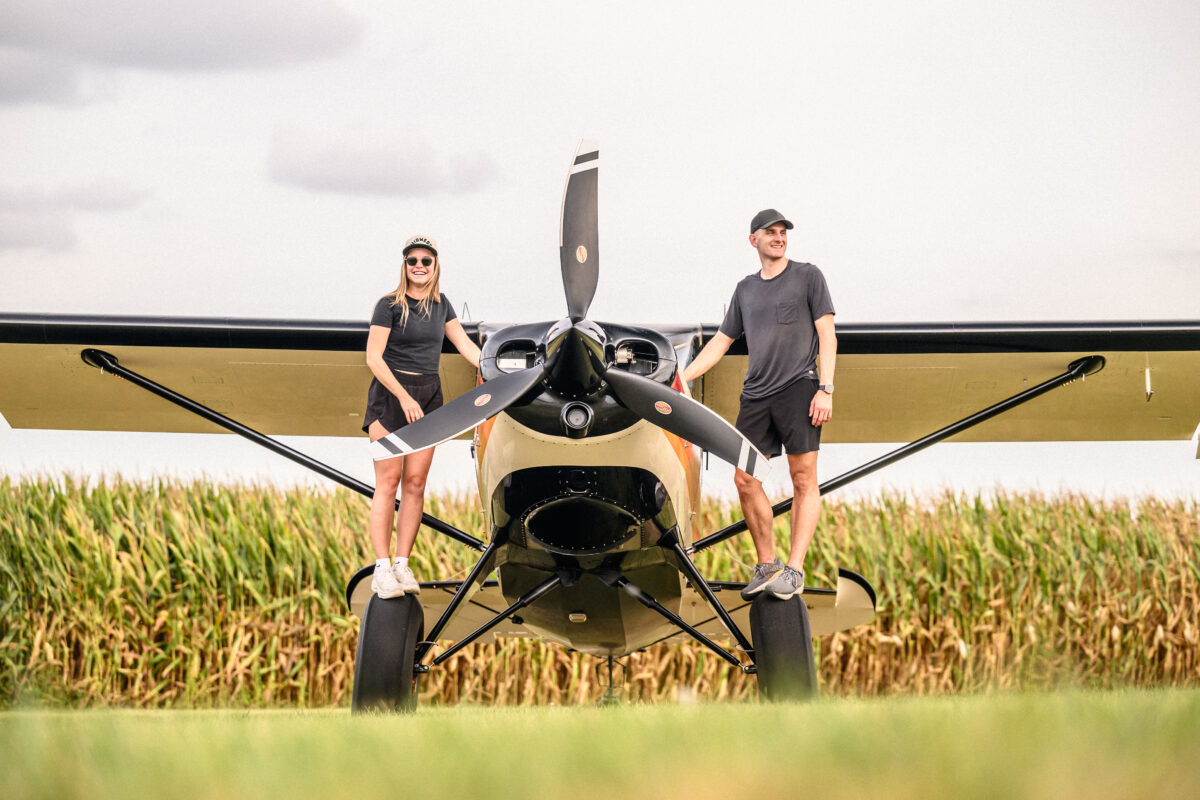

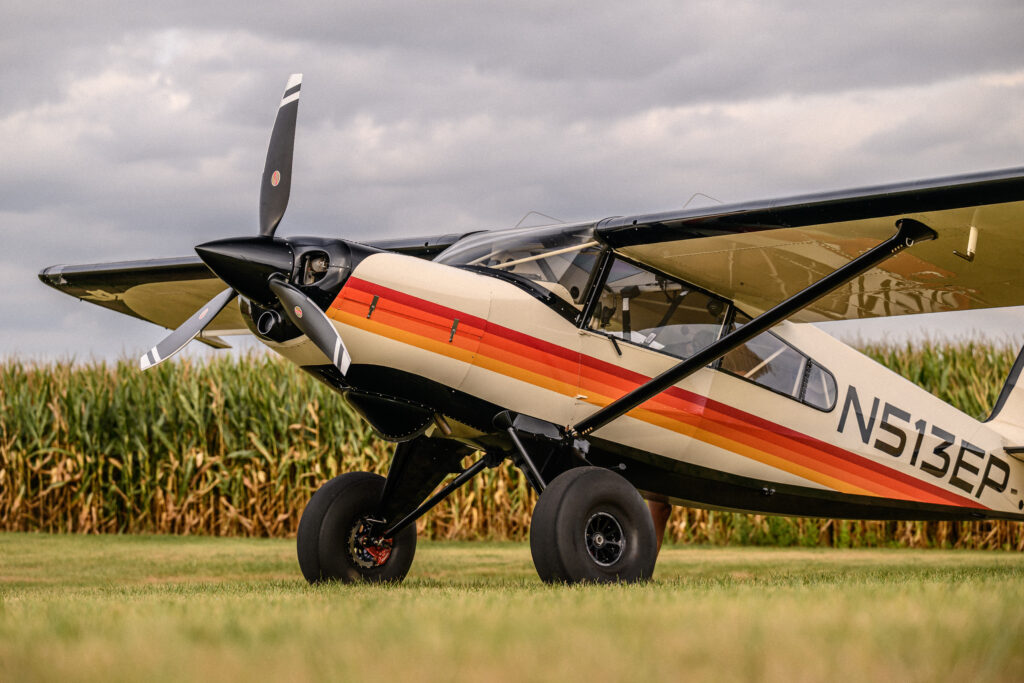
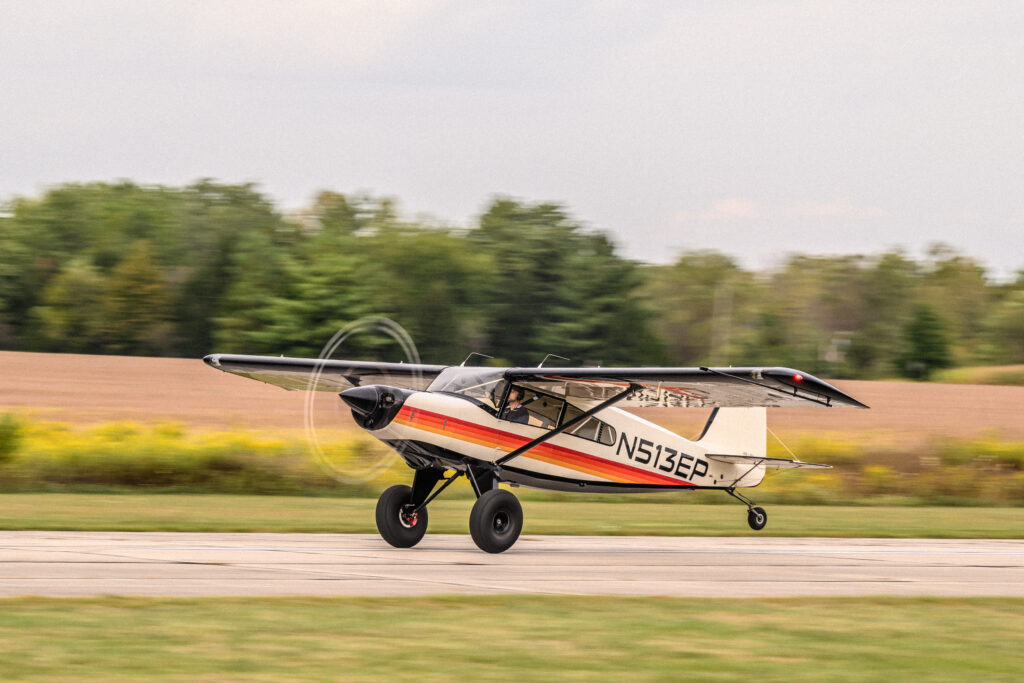
Husband-and-wife pilot duo Erin and Paul (@erinandpaulfly) fell in love with travel, adventure, and aviation after a campervan experience on their honeymoon. Following their passion, they built a Bearhawk Five equipped with a Hartzell carbon fiber Trailblazer prop, ready to handle backcountry landings, off-grid adventures, STOL operations, and bush flying.
Now, they’re planning to convert the aircraft into a modular camper plane to highlight their unique experiences on and off airports in each state, with the goal to inspire others and stimulate the growth of general aviation in the U.S.
We had the chance to host Erin and Paul for a tour of Hartzell Propeller’s headquarters, and they joined us for an exclusive Q&A session. Read more about their life and aviation adventures below:
Paul: I always loved airplanes as a kid. My brother and I would mess around on Microsoft Flight Simulator, and I thought it was the coolest thing in the world. But loving airplanes and actually believing you’ll become a pilot are two very different things. It always felt expensive and kind of out of reach, so I never really treated it like a serious option.
I went into nursing, became an ICU nurse, and eventually started travel nursing. Erin and I were long-distance for almost four years, and during one three-month nursing assignment in Louisville, I had more flexibility than I’d ever had before.
One night at work, when the ICU was quiet, an ad for a local flight school popped up on my screen. I remember thinking, I’ve got three months here, I don’t know anyone in town, and I’ve always said I wanted to do this…so why not?
So I signed up.
It was impulsive, but it wasn’t random. It was something I’d quietly wanted for years.
Okay, quick story: I still remember Erin driving down during that assignment to visit. I took her up in a little 172 with my instructor at the time. It was her first small airplane flight ever, and so, of course, at one point we pushed over into zero G without warning her. She was screaming in the back seat, and so we absolutely did it two more times. I genuinely thought she might never get back in a plane with me.
Erin: I didn’t grow up around aviation at all. What pulled me in wasn’t flying itself — it was what happened after we landed.
In late 2020, Paul and I started renting little 172s out of Fresno and flying to the coast. Sometimes we’d go to Oceano, grab bikes, ride to the beach, eat clam chowder, and fly home the same day. Other times we’d stay overnight in Paso Robles, wander wine country, and fly back the next morning.
Aviation wasn’t just about being in the air. For me, it was about access to travel and new experiences.
Eventually, I decided to get my license too. And that was a stretch for me. I came into aviation knowing absolutely nothing. I didn’t even know what rudder pedals did, so of course, there was real self-doubt. Earning my rating became not just about flying for me, but about proving to myself that I could do something hard and unfamiliar.
As for sharing it publicly, that part was intentional. We were watching travel creators build careers around exploring places and started asking why aviation couldn’t be the vehicle for that kind of storytelling. We weren’t trying to become aviation personalities. We just wanted to build something around the way we already loved to travel.
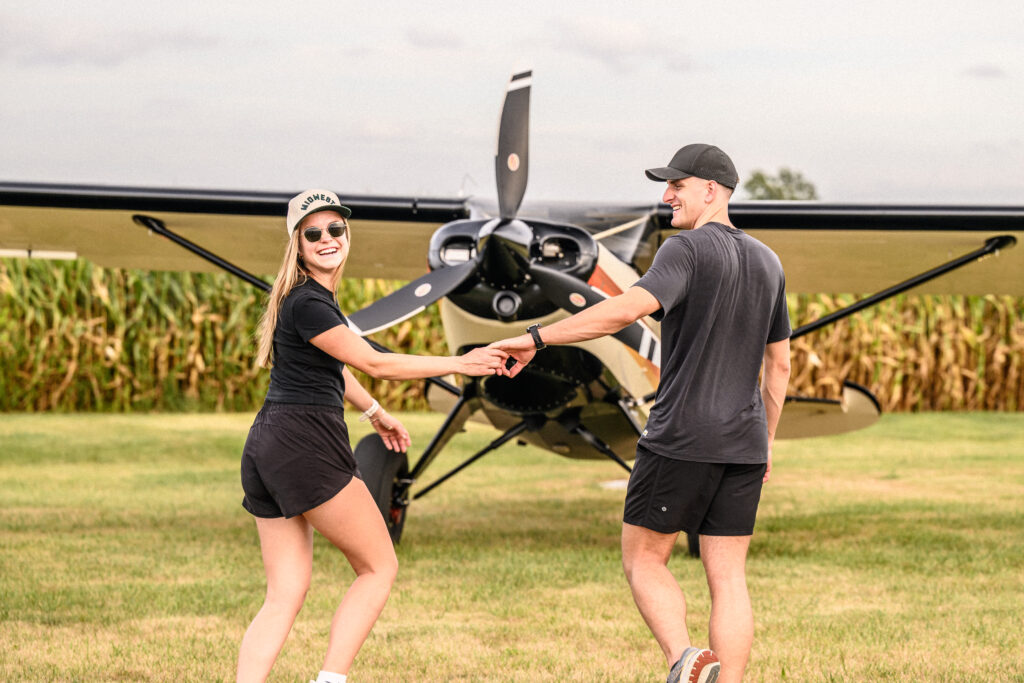
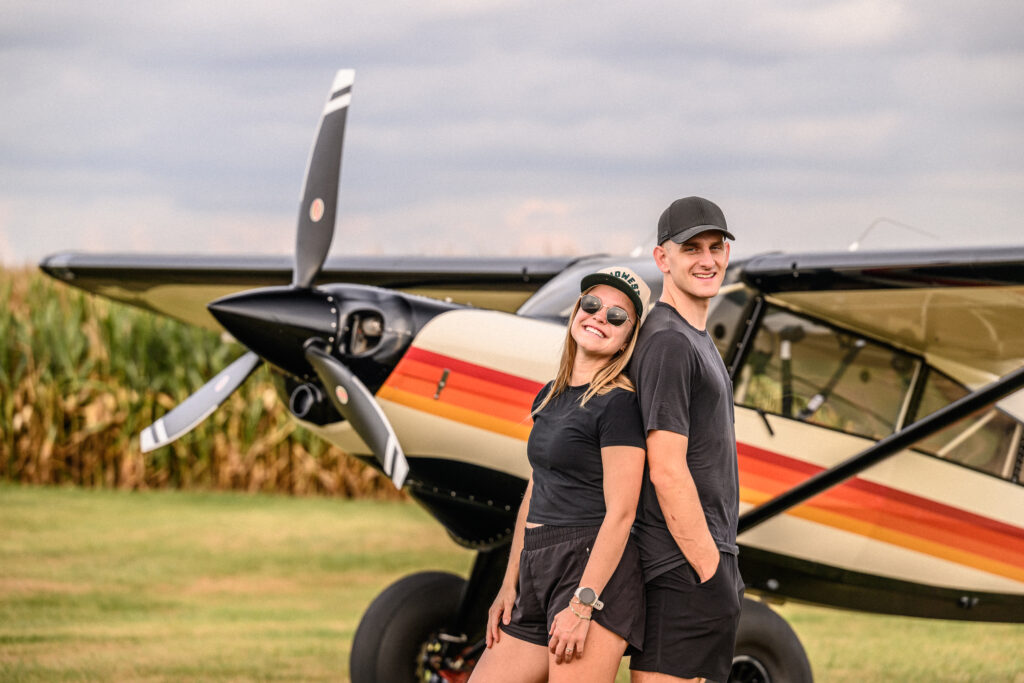
The biggest joy is the shared experience.
Before aviation, we supported each other’s careers, but we didn’t fully live in the same world, like nursing talk and photographer talk are pretty different. Now, when something happens in the air — a weather decision, a last-minute change, or just a cool approach into somewhere new — we both understand it instantly. There’s no translating it later. We both get it.
At the same time, building an airplane and running a business together isn’t light. There are financial pressures, creative differences, and days when one of us has more capacity than the other. When your marriage, business, and airplane are all tied together, compartmentalizing looks a bit different than most.
We’ve learned to trust each other, to communicate clearly (most of the time), and to respect that there’s usually more than one right way to solve something.
It’s definitely not perfect or always balanced, but to us, the joys definitely outweigh the challenges.
It came down to our mission.
We didn’t want an airplane that was just good at one thing. We wanted something that could go far enough that we’re not constantly stopping, fast enough that we’re not crawling across the country, land short enough that we’re not limited to long paved runways, and capable enough that if we heard about a cool strip somewhere outside a small town, it’s not immediately ruled out. Easy enough, right? (Laughs).
We looked hard at certified airplanes — 180s, 185s, 170s. Incredible machines, but you’re spending a lot of money on airframes with long histories. For what we’re doing (traveling full-time, hitting all 50 states, potentially operating in rural areas), being confident in the history and current condition of the plane mattered.
At Oshkosh 2024, we stumbled on the Bearhawk Five. When we saw the performance numbers for the first time, we honestly didn’t believe them. The useful load, short-field performance, and cruise speed all in one airplane felt almost unrealistic.
So we went home and researched everything. The more we looked, the more we were amazed by how it aligned with what we actually needed.
Builder-assist was huge because we never considered ourselves “builders”. We hadn’t ever used half the tools required to build that airplane. Having experienced oversight meant it would be built right and actually get finished on a timeline. And now that it’s flying, the fact that we touched every part of it changes how we operate it. There’s just a different level of understanding when you were a part of nearly every aspect of the build yourself.
Be ready for a lot of decisions.
There’s no way around that. Brakes, wheels, tires, engine, avionics, fabric, paint – those decisions add up quickly.
Early on, it felt overwhelming because we were trying to think ten steps ahead. In reality, most decisions show up when they need to, and the build assist team helped dial in the right choices for us. My advice would be to handle the decision in front of you and move forward. Especially if you’re building it yourself, you have time. The type of grips, or color of paint doesn’t need to be decided in month one.
Knowing what you want the airplane to actually do helps a lot. If you’re clear on your mission, it filters out a lot of noise.
We’re not out there trying to prove we’re hardcore bush pilots, but we wanted the airplane to have the capability if we chose to use it.
Even if most of our landings are on pavement, we didn’t want to be limited if we ever decided to drop into something less improved.
As builders, repairability mattered. If something gets nicked while we’re traveling across the country, what does that mean? Are we stuck somewhere waiting on shipping? Or is it something that can realistically be repaired?
The carbon fiber Trailblazer kept coming up in conversations with pilots who operate in tougher environments. The performance numbers were strong, but what we really loved was the durability and repairability. For our long-term travel, that definitely mattered a ton.
I haven’t flown this airframe with another prop, so I can’t do a direct comparison on the same airplane. But compared to the other aircraft I’ve flown before, the performance on this airplane is impressive.
On an 85-degree Arizona day, fully loaded, we’re consistently off the ground in about 500 feet without trying. The climb feels strong. In cruise it settles in smooth, and responds quickly when you adjust it.
For what we’re doing, it feels like a great match.
We’ve already taken it into dirt and gravel strips, and we’re finally starting to understand the performance envelope we actually have.
We definitely have a large envelope of safety margin, but after putting 150 hours on Tina, we have been so surprised by the ability to launch out of strips in such a short distance, even nearly fully loaded. Not only that, the prop still looks brand new. The nickel-cobalt leading edge is a game changer, and (I don’t want to jinx it), but not a single chip.
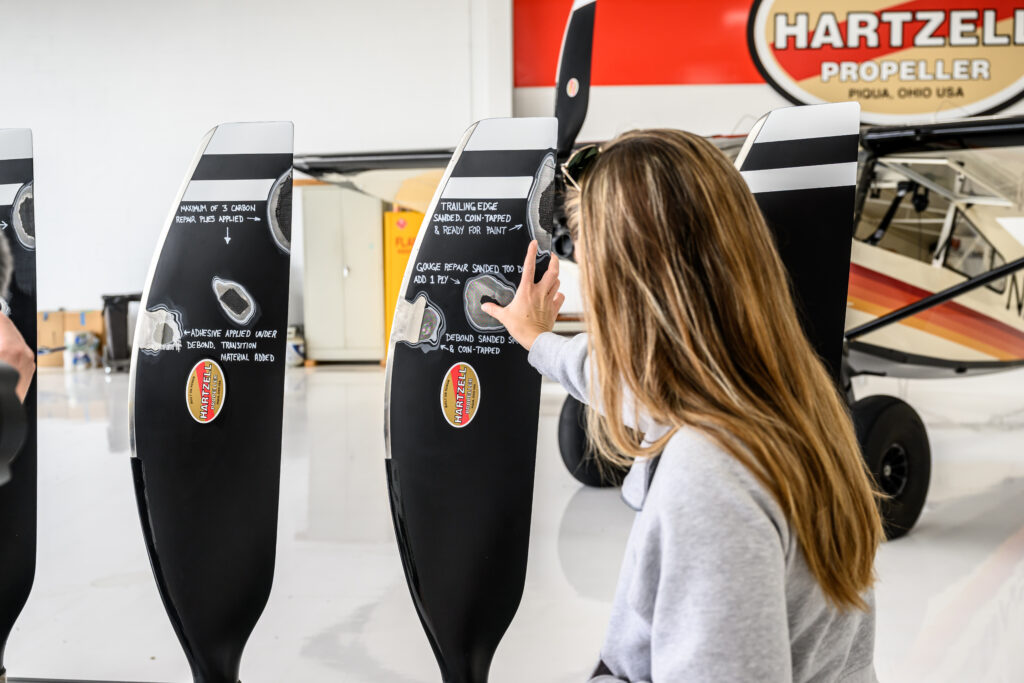
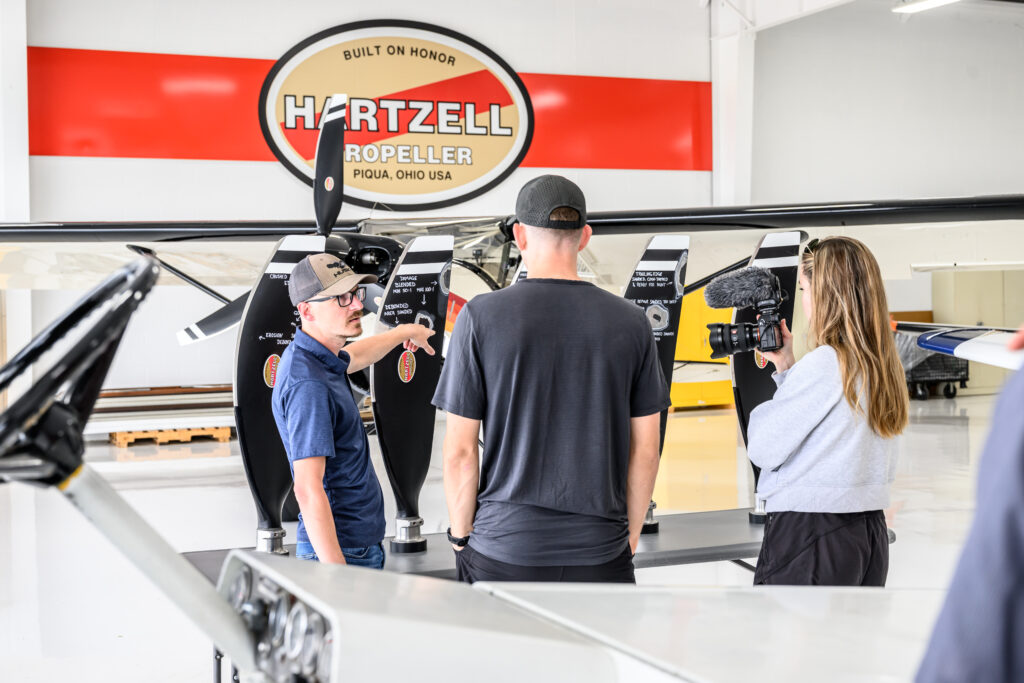
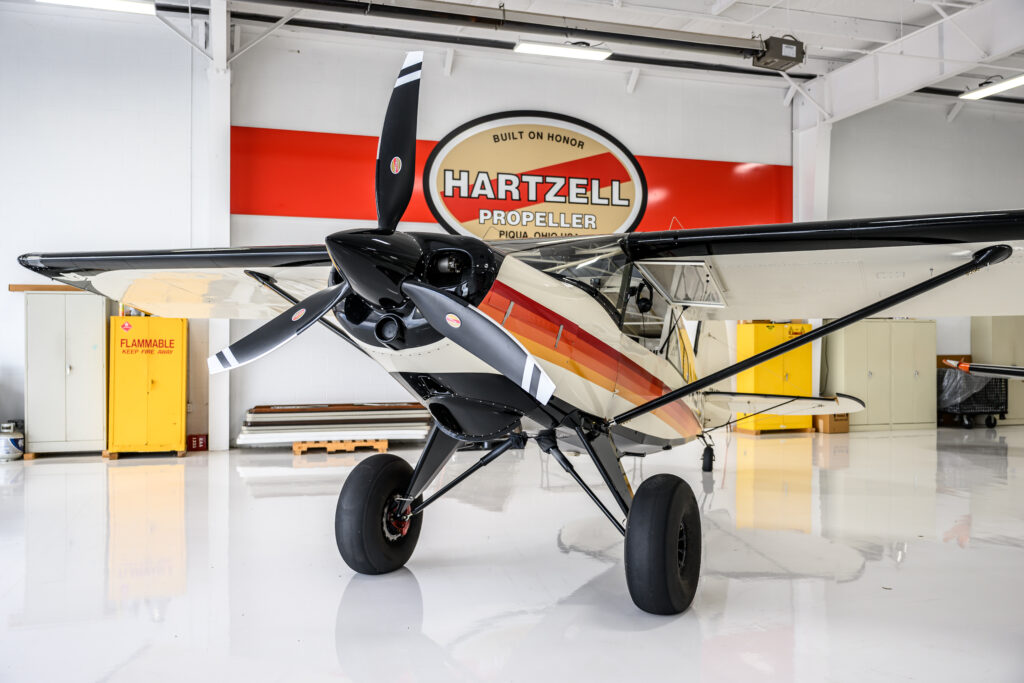
First of all, the people stood out immediately. You could feel the pride in what they do, and everyone was so welcoming and proud of the product they make.
While we were there, we were able to learn more about Hartzell’s wind tunnel testing and bird-strike testing on all of these carbon fiber blades, but what really stuck with us was seeing damaged blades and hearing how repairable they are. It’s one thing to read about that online. It’s another to see it in person and be walked through the process of in-field repairs. It’s not something that we want to ever have to do, but knowing it’s an option, and one that is super doable, adds so much confidence in the prop.
Honestly, I’d say make sure you both actually want it.
Flying is too expensive and too time-consuming for one person to be dragging the other along. It works for us because we both chose it. There isn’t resentment tied to it.
And then just be ready for the fact that you’re both going to see things differently sometimes. Weather decisions, timing, creative ideas, even how you want to use the airplane — that’s normal. We’ve learned that it’s usually not about who’s right. It’s about talking it through and remembering you’re on the same team.
Some days one of us takes the lead. Some days, the other does. And sometimes we literally just keep it light and let rock-paper-scissors decide who’s flying that leg.
It doesn’t have to be overly structured. It just has to be built on trust and respect.
For the next year and a half, it’s us traveling to all 50 states, exploring things to do on and just off the runway.
We converted the airplane into a camper plane so we can live out of it (and help minimize lodging costs) as we work our way across all 50 states. But the goal isn’t just to log states. We’re looking for the strips where only locals know there’s a hike, a river launch, a festival, a restaurant, or a story that most travelers would never hear about unless they were from the area or flew in and started asking around.
For example, we just finished flying into Marble Canyon, Arizona. We stayed a few nights at the lodge across from the runway and kayaked the Colorado River through Horseshoe Bend. It’s such a wild experience — flying yourself in, getting boated up to Glen Canyon Dam, dropped off with kayaks, and kayaking back down to where your plane is parked.
Converting the airplane into a camper gives us flexibility. Sometimes that means camping under the wing. Other times it means staying somewhere that’s part of the story itself. It lets us experience these places in a way that feels deeper than just passing through.
That’s the mission right now — uncovering the most interesting things to do on and just off airports across the country and sharing the people and stories that make those places special.
To follow along with Erin and Paul’s adventures, check out their YouTube, Instagram, Facebook, or TikTok.
And to learn more about the carbon fiber Trailblazer propeller or any of our backcountry kitplane propeller options, get in touch with our team. We’re here to answer your questions and help you find the aircraft propeller that’s right for your flying mission and goals.
P.S. Don’t forget that Hartzell Propeller is offering a $1,000 discount on new Hartzell backcountry aircraft propellers for members of the Recreational Aviation Foundation (RAF) now through the end of 2026!
For each discounted propeller sold, Hartzell will donate $250 to support the RAF’s mission of preserving backcountry aviation access. Hartzell backcountry propellers eligible for the discount include the carbon fiber Trailblazer, the Pathfinder, and the Carbon Voyager. To learn more, contact us today!